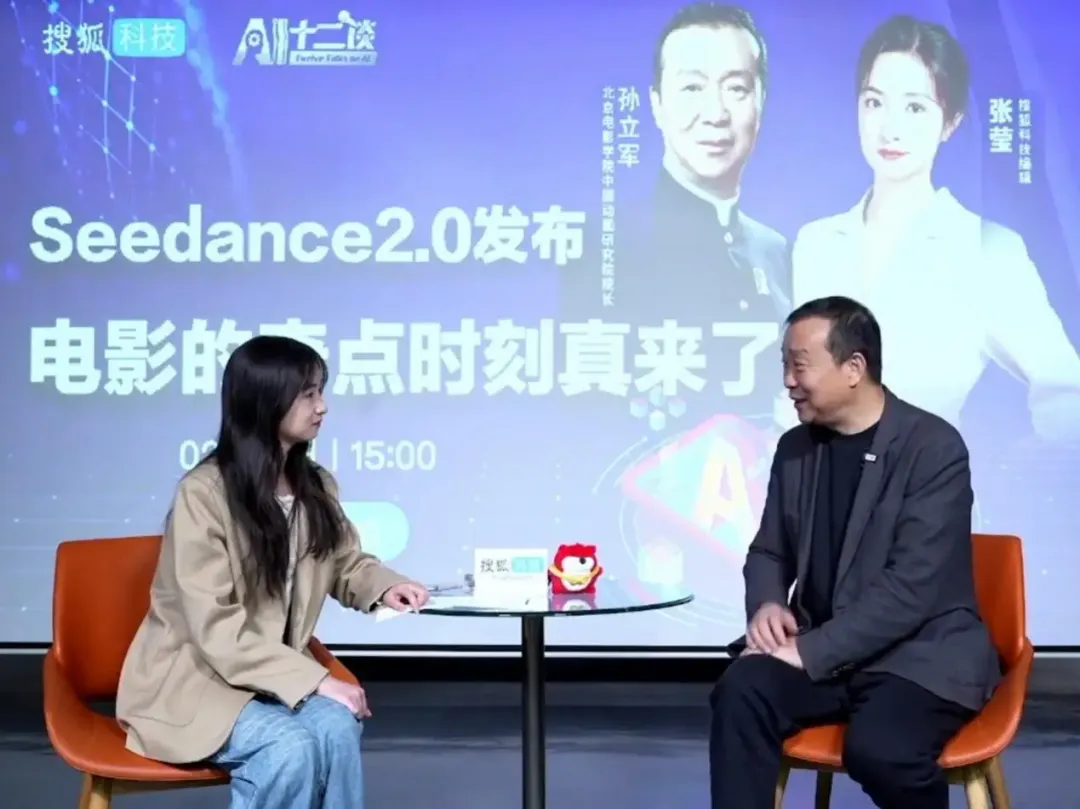
Sohu Technology interviews former vice president of Beijing Film Academy
Sun Lijun, Dean of the China Animation Research Institute of Beijing Film Academy
Produced by Sohu Technology
Author|Zhang Ying
Edited by Yang Jin
The recent release of ByteDance’s AI video generation model Seedance 2.0 has caused a stir in the film and television industry.
Amidst the stock price fluctuations, what amazed industry professionals even more was that it could not only generate videos, but also cut and edit scenes and add sound effects, ensuring that characters looked the same in different shots—like a “virtual film crew” that didn’t need to eat or sleep.
Some cheered for technological equality, while others worried about losing their jobs. But in Sun Lijun’s view, Seedance 2.0 is an inevitable product of the continuous iteration and development of AI technology.
As the former vice president of Beijing Film Academy and the dean of the China Animation Research Institute of Beijing Film Academy, Sun Lijun has three identities: he is a veteran animator who has witnessed the rise and fall of Chinese animation, a veteran filmmaker with decades of experience in the industry, and an educator who has spent his life standing on the podium.
Three years ago, when most of his peers were still rejecting AI-generated “weird pictures,” he had already decided to embrace AI. Two years ago, he published the world’s first monograph focusing on generative AI painting, “AI Painting: Contemporary Ink Art Is Happening,” feeding his own paintings to a large model for learning and placing AI paintings alongside the originals on the same screen to explore the advantages and limitations of AI painting. Now, he is using AI to assist in the production of a theatrical 3D animated film, “Snowy Mountain Mastiff King,” which he had wanted to make 20 years ago but had been shelved due to technology and funding issues.
“What used to take five years to make a film can now be done in a year. What used to require hundreds of people and a large investment can now be done by a small team or even an individual,” Sun Lijun emphasized. He stressed that films are spiritual nourishment, and good films cannot be made simply by spending more money. The difference lies in creativity and aesthetic ability.
“99% of people without talent will change careers,” Sun Lijun said bluntly.
In his view, intelligent imaging has blurred the lines between reality and digital, and the traditional Hollywood-style industrial film is a thing of the past. The era of relying on investment, stars, and marketing is over; the future will be about good stories, good ideas, and good aesthetics. And these are precisely the things that AI cannot provide.
One phenomenon that left Sun Lijun both amused and exasperated was that some of his students stubbornly insisted on drawing everything themselves, even if their drawings were inferior to AI, yet they maintained that that was true art; while others had already been empowered by AI. “You think yours is art, but whose isn’t? People use AI, and even I, an old animator, can’t tell the difference. Why do you insist that AI is worthless?”
Sun Lijun firmly believes that AI-generated works are not inferior to human works. “Conventional thinking makes people always feel that only live-action works are valuable, while animation is worthless.” In his view, AI liberates repetitive labor, while the most valuable aspects of film—creativity and aesthetics—have always been in human hands. To consider AI-generated works as inferior is “absolutely not true.”
AI has not only brought about a revolution in filmmaking, but also a transformation in education. “You have to work hard to be in that 1%,” he told the young people at the film academy. “You were selected from among hundreds; you’re already one of the ‘ones.’ But if you rest on your laurels and don’t learn or improve, you’ll become one of the 99%.”
The following is an abridged transcript of the conversation between Sohu Technology and Sun Lijun:
Don’t assume that AI makes things cheap.
Sohu Technology: When you first saw the video generated by Seedance 2.0, were you surprised or wary?
Sun Lijun: My impression of Seedance 2.0 is the same as everyone else’s. First, the original models didn’t look right when changing shots; they lacked stability. Second, the movements were very “fake,” lacking rhythm and with stiff expressions—all of these have been changed. Third, it has the quality of a director; it can seamlessly connect shots, and its imagination is better than that of the average creator.
Having worked in the industry for over 40 years, I feel that the era in which everyone can be an artist, filmmaker, or director has indeed arrived—although it’s not entirely objective yet, just like how everyone has a mobile phone, but not everyone is an excellent photographer.
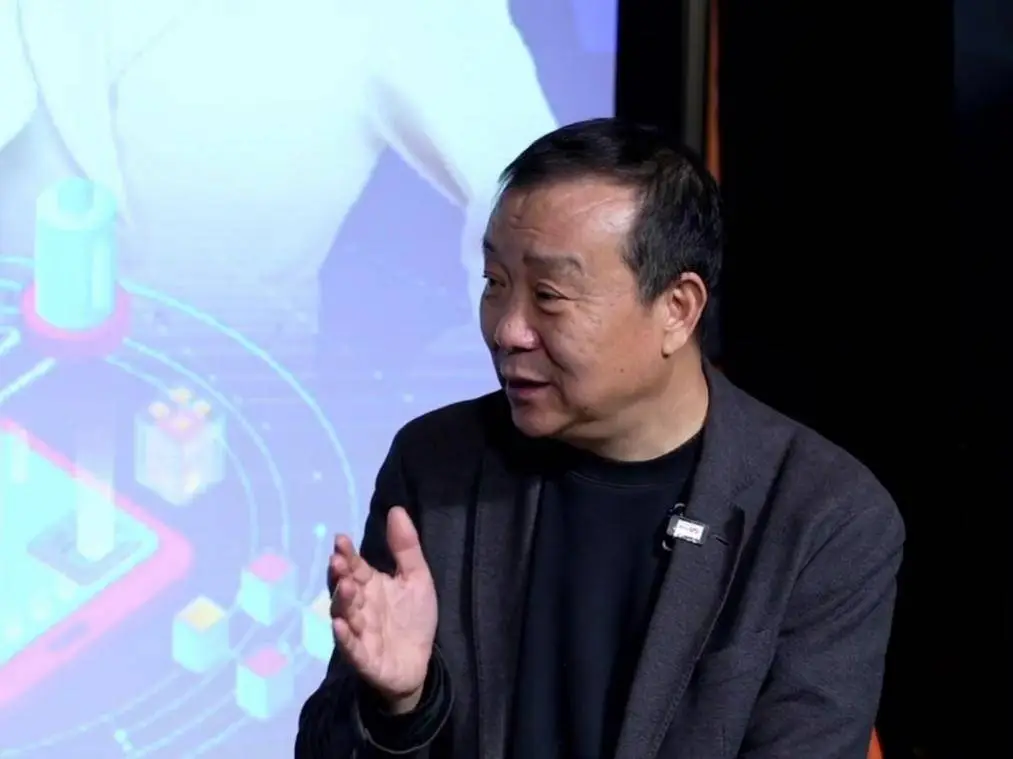
Former Vice President of Beijing Film Academy
Sun Lijun, Dean of the China Animation Research Institute of Beijing Film Academy
Sohu Technology: We know you’ve been very proactive in embracing AI. Since you started working with AI in 2023, what’s the biggest change you’ve noticed?
Sun Lijun: In 2023, we called AIGC (AI Generative Processing) images. Now I tell my students that we should call it “intelligent imaging,” which marks a significant departure from traditional imaging. Traditional imaging is produced using film or digital cameras; intelligent imaging is generated directly by inputting your photos and keywords, no longer dependent on the physical environment.
Sohu Technology: Once the boundaries between real and digital images disappear, will new concepts emerge?
Sun Lijun: As I just mentioned, we used to have a clear distinction between traditional filmmaking and digital animation, which is what we call live-action filmmaking. The emergence of intelligent filmmaking has broken down this boundary.
Creators, managers, and consumers all need to break away from traditional thinking. Don’t ban AI, but don’t assume that AI is inherently cheap.
The era of blockbusters—those big-budget productions, big investments, big stars, and massive marketing campaigns—is coming to an end. I can make a traditional blockbuster on my own. In the age of intelligent imaging, the traditional Hollywood-style industrial film is a thing of the past.
This is not just a technological revolution, but also a major reshuffle of the film industry. The single model of relying on investment, stars, and excessive marketing is over; the future will depend on good stories, good ideas, and good aesthetics.
In the era of intelligent imaging, future films will propel global civilization forward by leaps and bounds. This is beyond doubt.
Image
“Foreign countries are too conservative; China needs to seize this window of opportunity to overtake them.”
Sohu Tech: We know that you previously fed your paintings to AI to learn your style. Aren’t you worried about copyright issues?
Sun Lijun: I initially studied traditional Chinese painting and oil painting, and during my university years I was deeply influenced by Mr. Ada, and I have always focused on Chinese aesthetics. In the early stages, 99% of the large-scale models generated images in a European, American, or Japanese style. I hope my works can have some unique characteristics among the 1.4 billion Chinese people and within the AI large-scale models.
Only when thousands of outstanding Chinese artists embrace large-scale models can the world see Chinese aesthetics. Don’t be narrow-minded and confined to your own little world. Of course, some works or styles that are not mainstream may be difficult for large-scale models to recognize. Even if a large-scale model only recognizes my work once, I will still be proud.
Sohu Technology: But some people might feel that I have worked hard to create works that belong to my own style, but others have not paid me copyright fees. Don’t you have this concern?
Sun Lijun: First, copyright issues should be viewed from the perspective of intelligent image processing, rather than applying the framework of traditional copyright. Second, even if someone licenses the technology to a large model, it’s not guaranteed that anyone will use it. Only a handful of people worldwide have had their work widely generated—Van Gogh, Picasso, Da Vinci, Michelangelo, Miyazaki Hayao, and even China’s Havoc in Heaven. Most people who use AI to generate works in their style are doing so out of personal interest or for entertainment, without any commercial purpose.
Therefore, I personally believe that since we are embracing AI, we should allow for well-intentioned mistakes, rather than clinging to traditional copyright laws. International industry professionals are too conservative; we need to seize this window of opportunity to leapfrog ahead.
In the past three years, I haven’t seen anyone use my technology for production free of charge. On the contrary, I myself have used AI to publish a book, make short films, and am now using AI to assist in the production of the feature film “Snowy Mountain Mastiff King.” Twenty years ago, I spent tens of thousands of yuan to buy a Tibetan Mastiff puppy, raised it for a year, filmed its habits, drew pictures, and documented it—the costs were extremely high. 3D technology couldn’t keep up, and no one invested. Now, AI has made my 20-year-old dream a reality. During the 2027 winter break, everyone will be able to see this feature film, “Snowy Mountain Mastiff King,” set against the backdrop of the 4,000-meter-high snowy plateau, featuring Tibetan Mastiffs as the main characters, and imbued with the Chinese spirit—this is our Chinese version of “The Lion King.”
Sohu Technology: Are you worried that no one will watch movies made with AI?
Sun Lijun: No. Audiences watch for stories , for whether there are memorable stories and whether there is innovation.
Twenty years ago, I couldn’t make “Snowy Mountain King” because of funding and technological limitations. Now, AI has broken through those limitations. But the core is still the story. If an idea from 20 years ago still has vitality today, audiences will like it.
Intelligent imaging produces a lot of convenient products, but without a story or soul, how can audiences buy into them? Even movies starring big stars can flop at the box office. Story is still king.
Sohu Technology: Many people still feel that AI works are inferior. What is your opinion?
Sun Lijun: I haven’t thought that way since 2023. Due to ingrained thinking, many people believe that traditional live-action performances are valuable, while animated versions are worthless. You’ve heard of celebrities earning tens of millions in fees, but you’ve never heard of Sun Wukong (the Monkey King) receiving a fee; at most, the copyright is sold.
This kind of thinking is not suitable for the era of intelligent imaging. Creativity and aesthetics are the core.
AI liberates us from repetitive labor , but it doesn’t solve the problem of cutting-edge creativity. The most valuable aspect of film is human originality and the methods for harnessing and collaborating with AI. Don’t look down on AI-generated content ; it’s not like that at all.
Sohu Technology: Seedance 2.0 seems very suitable for making comics. What impact will AI have on this kind of new industry?
Sun Lijun: From a market perspective, the most basic aspect of AI is improving efficiency and reducing costs. Seedance 2.0 has significantly lowered the barrier to entry for producing micro-dramas, which amplifies the value of creativity.
Producing several or even hundreds of episodes a day isn’t difficult; the challenge lies in getting viewers to watch them. Therefore, the key is in the creativity and unique imagination of the content. Use the time saved to unleash your creativity. Those low-quality cultural products will soon be obsolete.
Image
AI will cause 99% of people without talent to change careers.
Sohu Technology: If everyone can be a director, and the technical threshold is leveled out, what will differentiate films in the future?
Sun Lijun: The difference lies in the fact that someone without professional training is still at the tool level when using AI. They can only rely on intuition when it comes to themes, genres, character arcs, audiovisual language, and mise-en-scène. They might be able to make a three- to five-minute short film, but it’s difficult to create a 90-minute theatrical production. Therefore, without professional skills, their success will only be short-lived.
What are the differences between future films and traditional films? First, with the empowerment of AI, what used to take five years to make a film can now be done one year, resulting in five films in five years. Second, what used to require hundreds of people and large investments can now be done by small teams or even by themselves.
Ultimately, however, film is spiritual nourishment; a good film isn’t simply about spending a lot of money. The difference lies in creativity and aesthetic judgment. Like traditional films, without a good story and good aesthetics, the work has little value.
Sohu Technology: What changes will this bring to film education? Will it reduce the emphasis on technique?
Sun Lijun: The changes are enormous. AI is not only disrupting industries, but also education. Starting in the second half of 2025, my colleagues and I have been repeatedly emphasizing one word: interest. In the age of intelligence, interest is extremely valuable.
AI presents an even greater challenge. Teachers are clinging to outdated knowledge, teaching material from ten or twenty years ago, while students can solve problems with a simple model. This forces us to re-evaluate our teaching methods.
AI will force 99% of untalented people to change careers. If you lack creativity and aesthetic sense, and your work is inferior to what AI can generate with a single click, elimination is inevitable. My next prediction is that traditional film education, animation, live-action films, games, and all art forms will face significant changes, and very soon.
Sohu Technology: Perhaps the same applies to other industries. If only 1% of people remain, what will happen to the rest of us?
Sun Lijun: I have no say in this matter. But returning to the film industry, young practitioners cannot be complacent. They cannot define their future by traditional college entrance examination scores; they must learn to draw from diverse sources and understand cutting-edge developments. You must learn to master the present, not be mastered.
Sohu Technology: For actors, will acting skills still be important in the future? Will there be actors who directly sell their likenesses to AI?
Sun Lijun: Why buy his image? You have to become a traditional star first to have the commercial value of a “star.” I’ve said before that virtual stars will account for half of the market in the future.
Now that AI is here, who will use you, 99% of actors? If you truly have an exceptional image, I think they should price their image as soon as possible and license it to a skilled AI team. Excellent actors rely not only on their looks, but also on their creativity. Twenty years ago, I saw a scene on a movie channel: a silhouette, hands in pockets, angrily kicking away a can on the ground. Even just a silhouette in the dark left a deep impression on me. It wasn’t until he turned around that I recognized him as Jiang Wen. I believe that creative actors like Jiang Wen will not be replaced by AI—he is among the 1% who will remain.
But most of our actors, despite their systematic training, lack creativity and will be eliminated in the future. 99% of people in the animated film industry face this predicament, and actors are no exception.
Sohu Technology: What would you like to say to the young generation studying at film academies today who are both excited and anxious about AI?
Sun Lijun: Strive to be that 1%. Whether it’s our film academy or other top art schools in China, you were selected from among hundreds, you’re already one of the “one” in the crowd. But if you rest on your laurels and don’t study or improve, you’ll become one of the 99% within that “one”.