

Editor’s Note: Artificial intelligence is comprehensively reshaping the film industry’s production paradigm. At the 16th Beijing International Film Festival Huairou venue and the 6th China Film City Development Forum in 2026 , Huairou China Film City showcased 10 AI-powered, locally produced original theatrical films , with a total investment exceeding 500 million yuan. This marks a new stage in China’s intelligent film industry, transitioning from technological pilot projects to mature commercial applications in theaters . The films are directed by Sun Lijun, a leading talent from Beijing’s “Jinglangya” talent program and a renowned director . This release is the first domestic series of theatrical-level AI-powered intelligent film matrices . Media platforms including Animation Research, the China Animation Research Institute, the Beijing Film and Television Animation Association, the AI Future Film Research Institute, and the International Animation Art Research Institute will jointly follow the series of in-depth interviews.
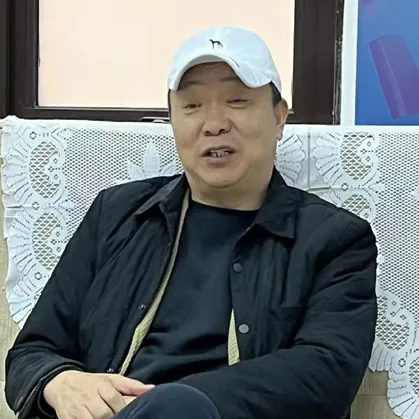
Interviewee:
Sun Lijun, chief director of ten Chinese theatrical-level AI-powered films.
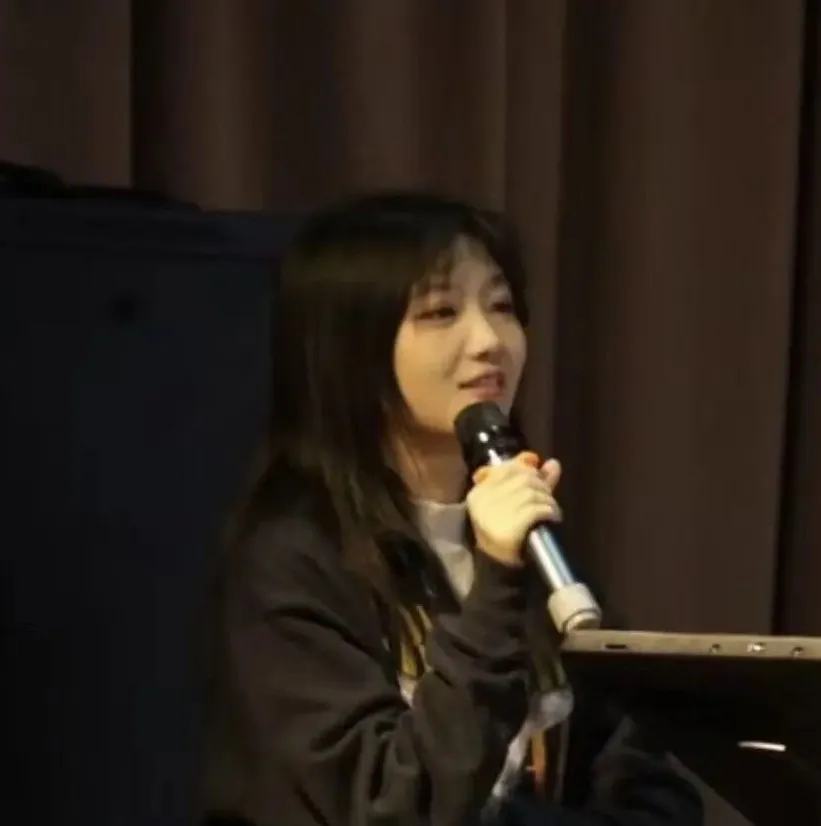
Interviewer :
Xia Ziyu, a 2025 graduate student at Beijing Film Academy
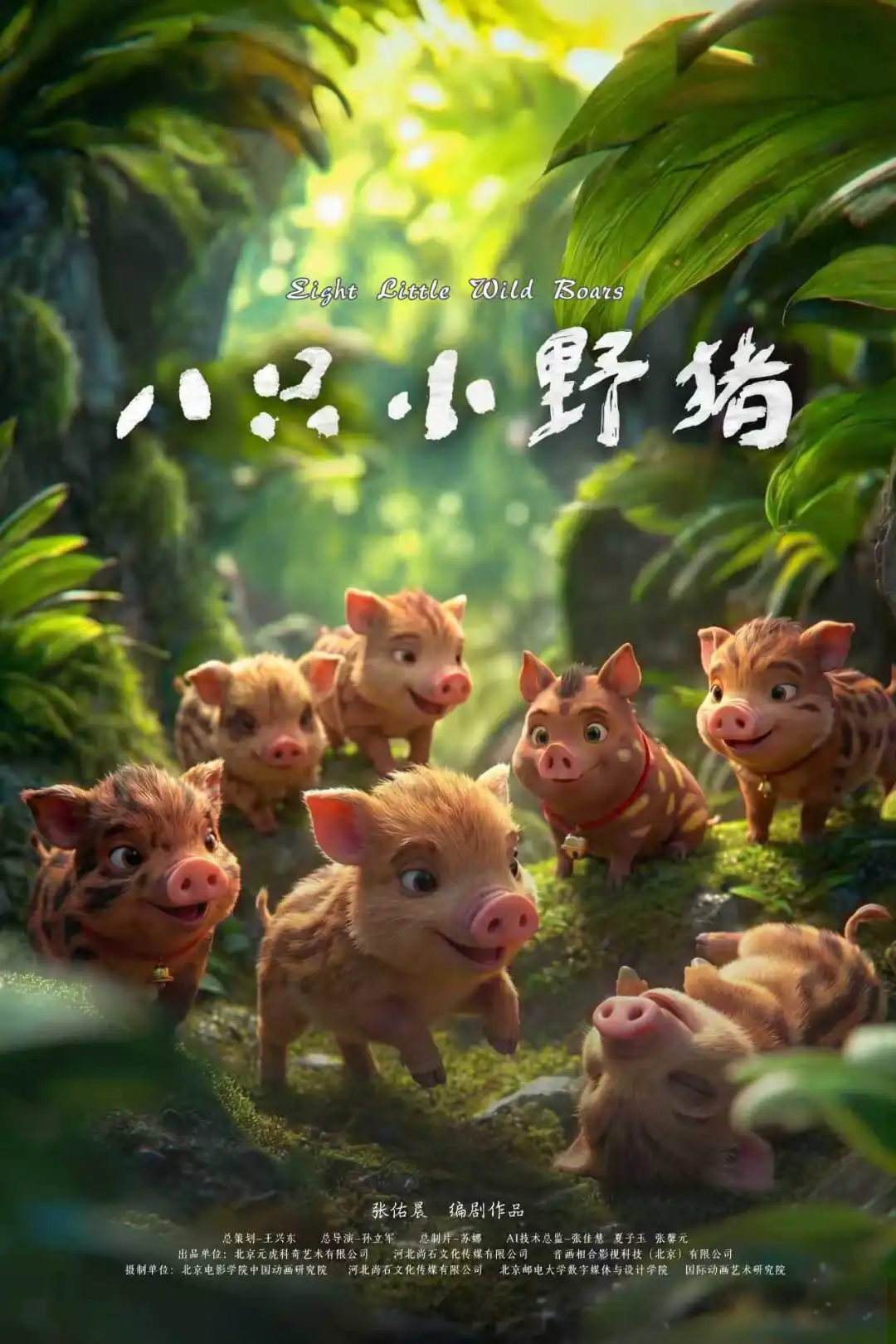
Poster for “Eight Little Wild Boars”
Interview Background
-
Project Origin: The script originated from the studio of renowned screenwriter Wang Xingdong. It was initiated as a live-action project 5 years ago, but was shelved due to funding and excessive filming difficulties.
-
Key to Transformation: AI Technology Enables the Transformation of “Impossible Live-Action Filming” into Producible Animation
-
Film positioning: Animated, heartwarming family-friendly, light comedy.
-
Story theme: Set in a rural area of Northeast China, focusing on harmonious coexistence between humans and animals and environmental protection concepts.
Interview transcript
Xia Ziyu: Hello, Director Sun Lijun, I am Xia Ziyu, a 2025 graduate student at the Beijing Film Academy. Thank you very much for accepting our interview today. We mainly want to discuss the film Eight Little Wild Boars with you, focusing on its project concept, AI transformation, team building, and future market prospects. First, could you please introduce the story of Eight Little Wild Boars?
Sun Lijun: First of all, the project “Eight Little Wild Boars” was recommended by the studio of Wang Xingdong, a renowned screenwriter in our country. The story is about a boy named “Xiao Huanzi,” around ten years old, from a rural area in Northeast China, and eight little wild boars. Their relationship is both one of mutual dependence and a special emotional bond built through their daily interactions. The entire story takes place in rural Northeast China; it’s not just about the relationship between a child and animals, but more importantly, it conveys the relationship between humans and animals, and humans and nature. It includes the natural emotional connection between humans and livestock, and humans and the land, within the rural environment. I think many children in cities today rarely have this kind of real-life experience, so the story itself carries a sense of rural life and childhood.
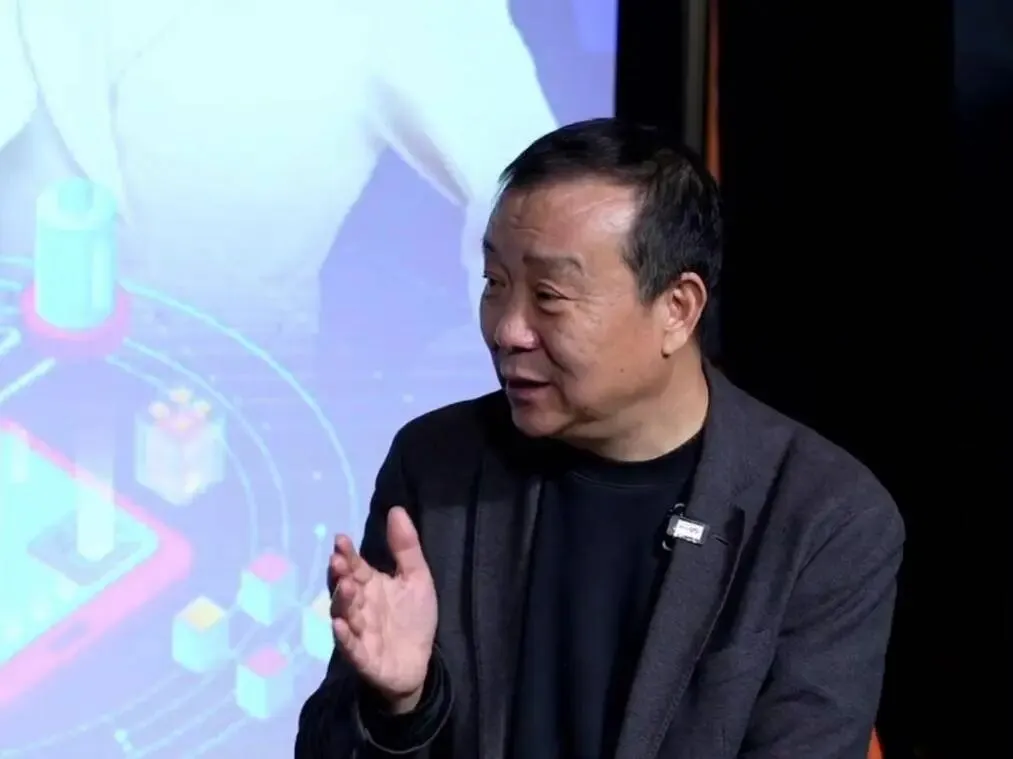
Sun Lijun, the chief director of “Eight Little Wild Boars”
I myself grew up in the countryside until I was nine years old. Although I’m from rural Hebei, not Northeast China, many of my childhood memories are actually quite similar. For example, when our family’s big yellow dog went missing and was stolen, I cried terribly. And the chicks and ducklings that hatched at home—that natural bond between humans and animals can influence a person’s entire life. So what attracts me to “Eight Little Wild Boars” is its incredibly real and simple emotional power.
Xia Ziyu: I understand that “Eight Little Wild Boars” was originally a live-action film project, but later shifted back to AI animation. What judgment did you make at the time that led you to decide to restart the project using AI?
Sun Lijun: That’s right. This project was originally planned as a live-action film five years ago. However, due to various practical reasons, including production costs, filming difficulties, and timelines, the project never actually came to fruition. Later, with the emergence of AI, the situation changed drastically. Professor Wang Xingdong is also a big advocate of AI technology and has been paying close attention to its development. He saw that I had been actively promoting the exploration of AI animation and AI film over the years, so we revisited the project.
Why the restart? Simply put, because AI has changed many aspects of the traditional film industry’s logic. In the past, making a film, especially one involving animal themes, rural settings, and extensive scene arrangement, meant high investment, high costs, and a long production cycle. But with the advent of AI, the biggest change is “quality improvement and efficiency enhancement.” It can significantly shorten production cycles while reducing costs. In other words, many stories that were previously impossible due to high industrial barriers now have the opportunity to be revitalized. “Eight Little Wild Boars” is a great story in itself; its lack of realization in the past doesn’t mean it wasn’t worth making. It’s precisely because of AI that we feel this story finally has a chance to be realized. In the AI era, what’s truly scarce isn’t technology, but creativity and storytelling. Technology will continue to iterate, but what truly moves people is always the content itself.
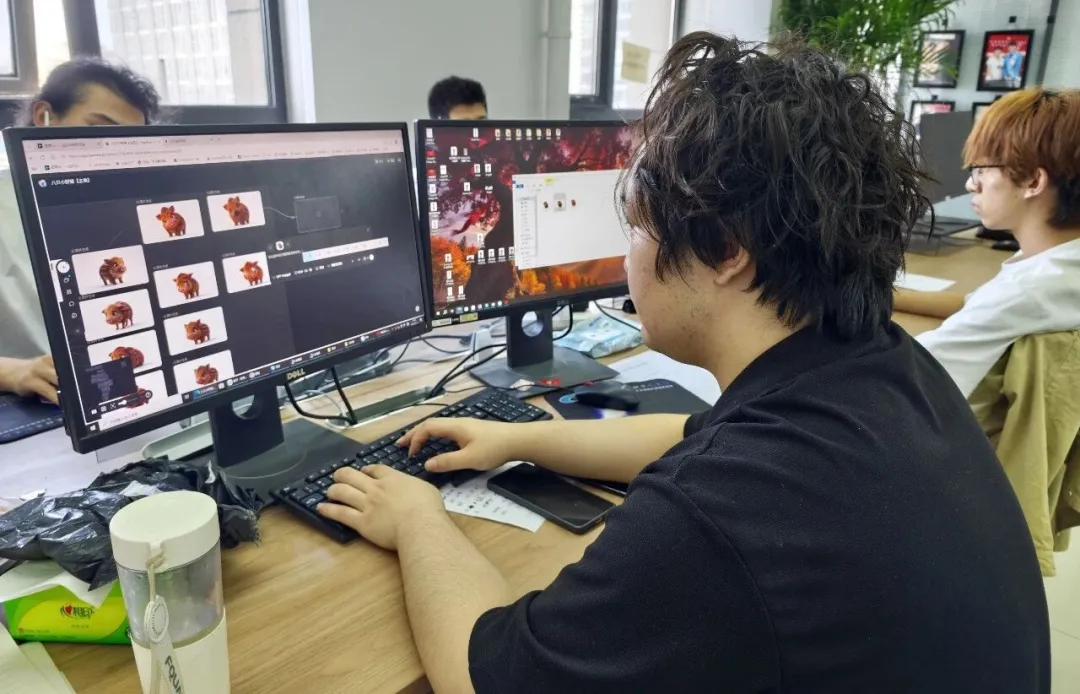
The production team of “Eight Little Wild Boars” is currently working on…
Xia Ziyu: You just mentioned some of the creative origins behind this project. I’d like to ask you to elaborate further. When you decided to revive this previously shelved script, were there any particularly moving creative prompts or stories behind it?
Sun Lijun: Actually, the most important reason is that it’s a “good story.” Teacher Wang Xingdong and his team have always cherished this project, but in the past, they lacked the suitable production conditions. Later, as AI technology matured, everyone felt that the time was right to restart the project. I believe a good story never goes out of style. Especially works like “Eight Little Wild Boars,” with their strong rural flavor and emotional relationship between humans and animals, have a very strong universality. So when everyone revisits this project, many things actually make perfect sense. Another point is that I think many children today, especially those in cities, are increasingly unfamiliar with rural life. The natural relationship between humans and nature, and between humans and animals, is slowly fading away. Therefore, I think this kind of subject matter is valuable; it’s not just about nostalgia, but also about the transmission of cultural memory and emotional experience.
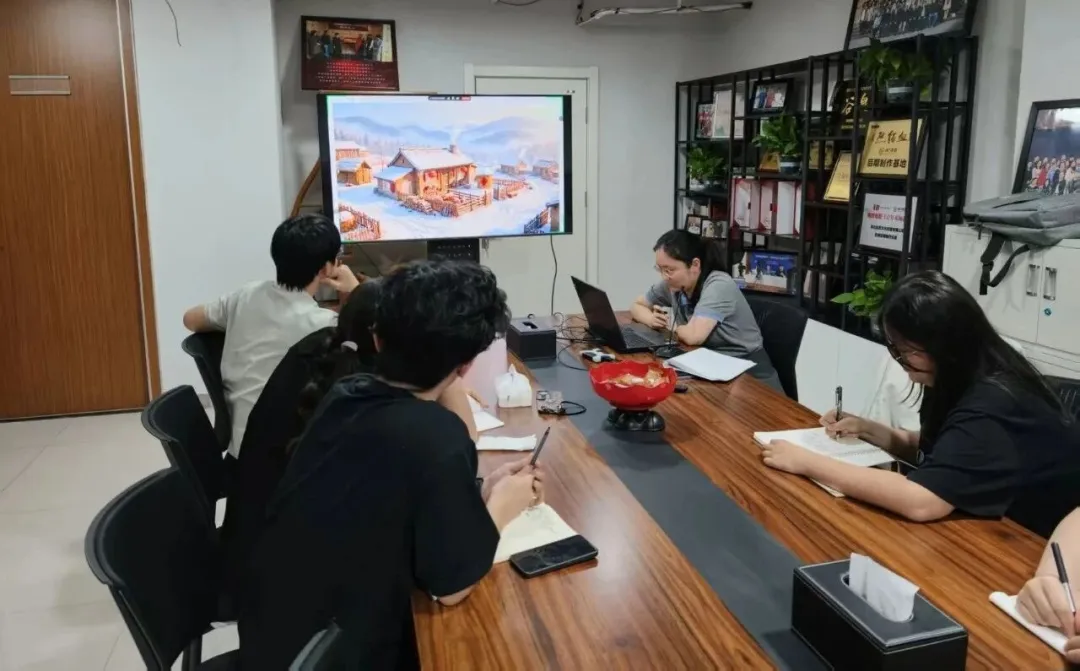
The production team of “Eight Little Wild Boars” held a topic selection meeting.
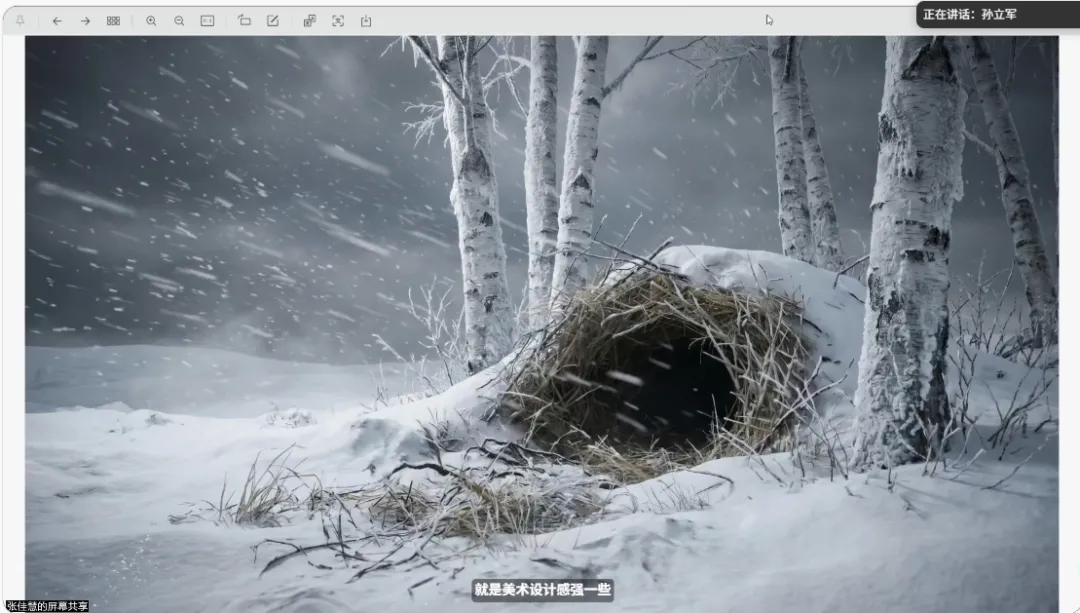
Sun Lijun, the general director of “Eight Little Wild Boars”, was in charge of the creation.
Xia Ziyu: After the project shifted to animation, compared to the original live-action version, were there any adjustments made to the film’s plot structure or content focus? Including the AI-based image logic, were there any parts that were particularly emphasized?
Sun Lijun: There will definitely be adjustments. Because animation and live-action shooting are two different visual logics.
When filming live-action, many things leaned towards realism. But when converted to animation, we had to leverage the unique characteristics of animation itself. For example, animation emphasizes exaggeration, humor, and light comedy, so our first focus was on enhancing the character designs. The eight little wild boars, as the main characters, have more exaggerated and animated designs than before. At the same time, we wanted Xiao Huanzi, the male protagonist, to be both an ordinary rural child and a very loving and sensible little “adult.” Because he has developed a very deep bond with the little wild boars, their every move directly affects his emotions. This “emotional relationship” is actually the core of the entire story. So what we’ve been doing is: preserving the core emotional expression of the original script, but further amplifying and enriching the scenes, characters, and drama during the animation process.
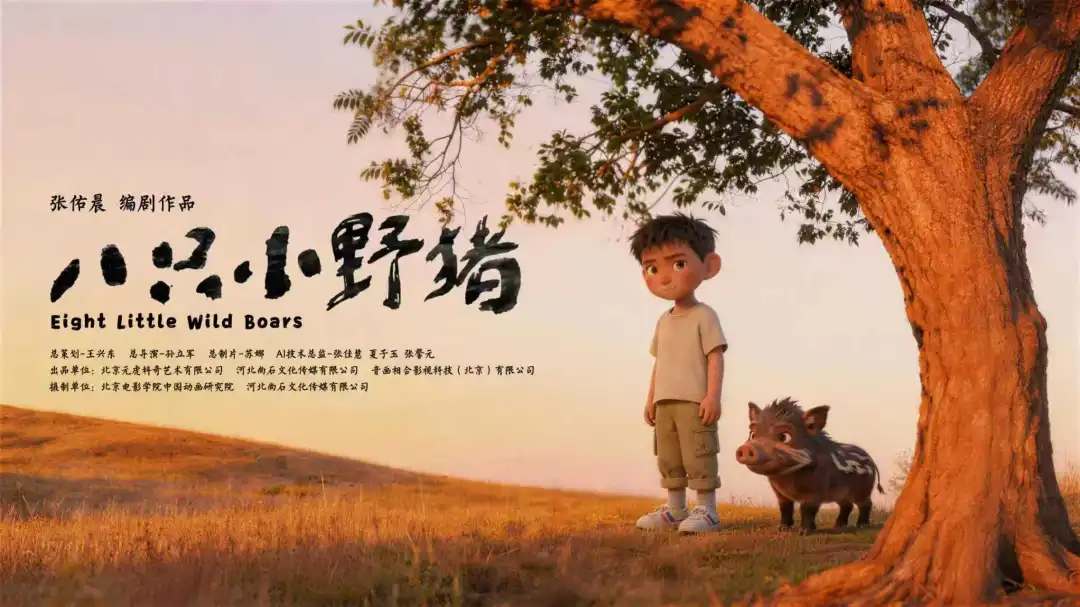
Poster for “Eight Little Wild Boars”
Xia Ziyu: You just mentioned the emotional relationship between “Xiao Huanzi” and the wild boar, as well as the regional background of rural Northeast China. I’d like to ask further: from an overall narrative perspective, does this film lean more towards character relationships and emotional expression, or more towards the progression of events? During the creative process, was there any deliberate emphasis on a particular core storyline?
Sun Lijun: This film is actually positioned as a “family-friendly” film. That is to say, it is for children, adults, and the elderly. Therefore, it needs to be both entertaining and artistic. The entertainment value is to make the audience willing to watch, while the artistic value is to truly move the audience.
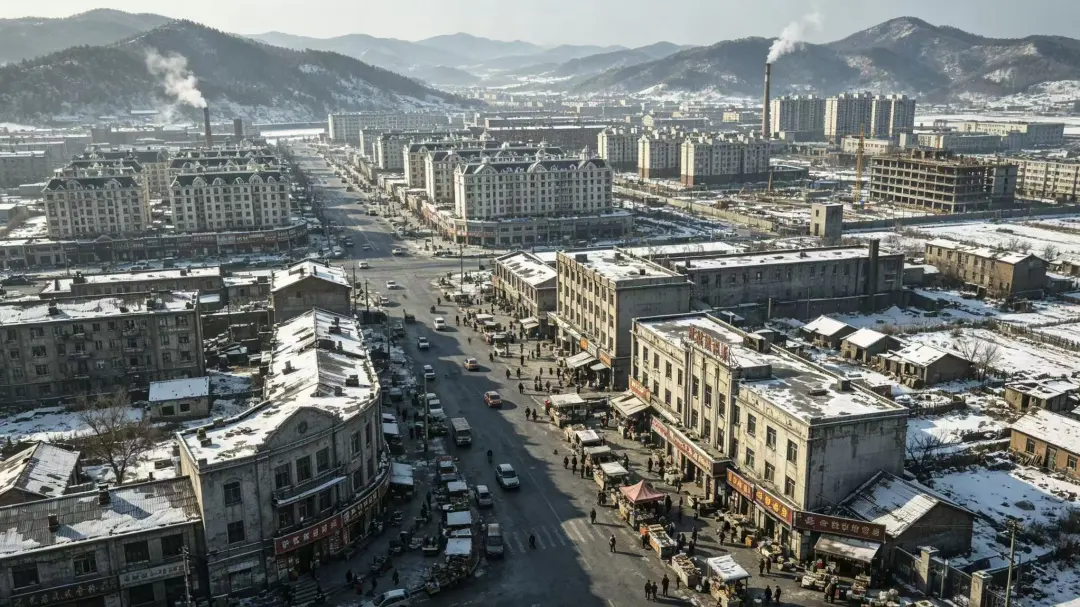
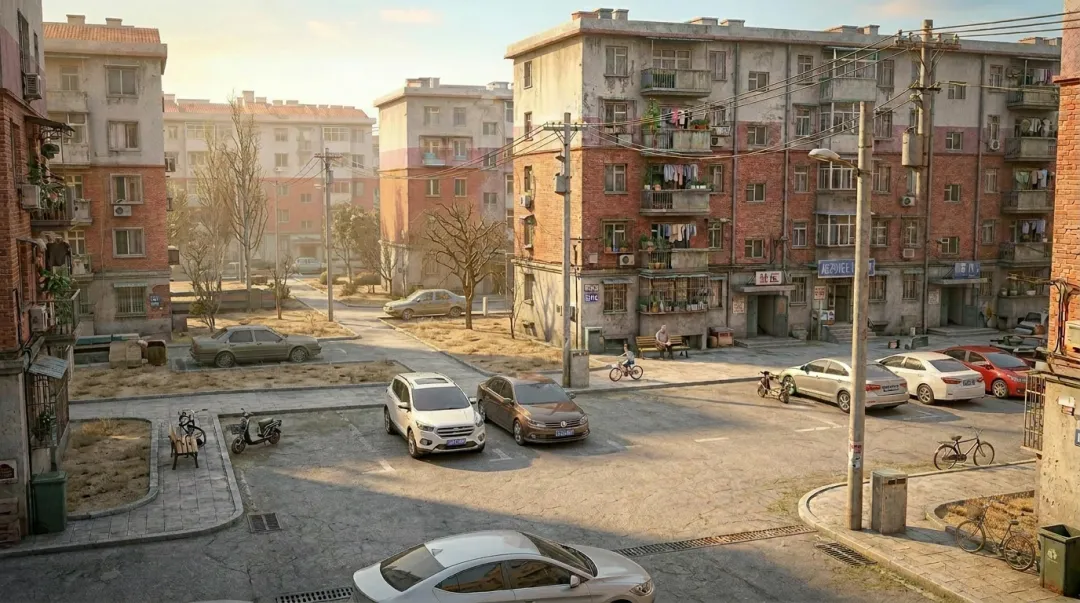
In this film, we placed great emphasis on emotional expression. Especially the emotional relationships between characters; these aren’t simply conveyed through actions, but through “performance.” I’ve always stressed that characters aren’t “moved,” but “acted.” What sets Eight Little Wild Boars apart from many traditional animations is the authenticity of many of its emotions. Viewers will see heartwarming and poignant scenes, and may even shed tears. Although it’s animated, its emotions are genuine. Another crucial point is the film’s portrayal of Northeast China’s regional culture. The rural landscape, heated brick beds, snowfields, and rural environment of Northeast China are rarely seen in animated films. We wanted it to possess both the texture of a realistic subject matter and the charm of animated expression. Ultimately, we hope that through this story, viewers will feel the power of truth, goodness, and beauty. The conflict between good and evil will also be a recurring theme throughout the film.
Xia Ziyu: You just mentioned that this film aims to present the regional culture of Northeast China while also capturing a crucial emotional thread. We know that AI-generated images often rely on a generation logic based on a large amount of existing material. Given that Northeast China is a relatively rare regional expression in animation, did the team have any special requirements or focuses in the production process?
Sun Lijun: We know that a very important characteristic of animation is “creating something from nothing.” Traditional animation involves animators designing many things bit by bit, while AI large-scale models are also based on the ability to form from massive amounts of data. Although there are relatively few Northeast-themed works, I don’t think we need to worry too much. Because AI itself also has a certain creative ability, and when combined with human creation, it can actually achieve the effects we want. Another point I’ve always emphasized is that Chinese animation must have a Chinese aesthetic. The regional culture of Northeast China has actually accumulated extensively in many paintings, comic strips, and literary works. So we are not completely without a visual foundation.
On the contrary, I think projects like “Eight Little Wild Boars” are themselves providing experience for exploring more AI animations with Northeast China themes in the future.
Xia Ziyu: We’ve talked a lot about creation and filmmaking. Now, could you please introduce the main creative team behind “Eight Little Wild Boars”? Including animation, art, technology, and AI-related personnel, how was the entire production team assembled?
Sun Lijun: One of the biggest changes in the AI era is the restructuring of production teams. In the past, an animated film might have required hundreds of people, but now AI has significantly reduced the manpower needed for many aspects. Therefore, the team for Eight Little Wild Boars wasn’t particularly large. However, a smaller team doesn’t mean lower requirements. On the contrary, because the team is smaller, everyone needs to possess stronger comprehensive abilities. I’ve always emphasized that what we need now is a “high-quality creation strategy,” rather than simply pursuing speed. The most important qualities for team members are creative ability, imagination, and aesthetic sense, especially imagination. Because AI is just a tool; it won’t automatically complete the artistic creation for you. The same prompt might become a very rich world in the mind of someone with imagination, but in the mind of someone without imagination, it might just be a very ordinary scene. Therefore, I think the true core competitiveness of future AI animation is still human creative ability.
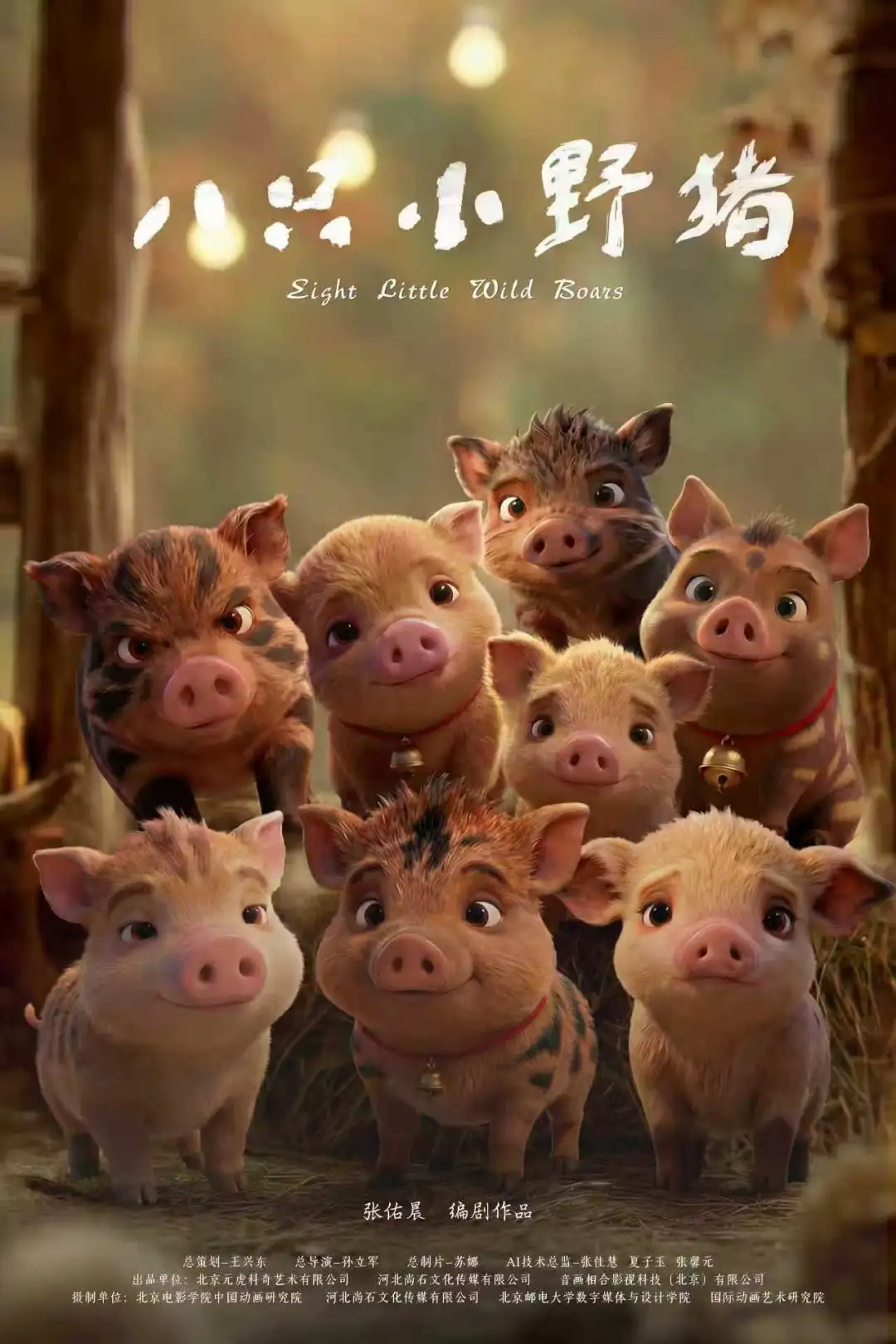
Poster for “Eight Little Wild Boars”
Xia Ziyu: I’d like to expand on that question further. You just mentioned that AI-powered theatrical films don’t necessarily require a particularly large team right now. So, in your opinion, what is the most crucial competitive advantage for talent truly working on AI-powered theatrical films at this stage?
Sun Lijun: First and foremost, it must be imagination. Because now one person might have to do the work of many people in the past, the most scarce resource is creative ability. The same sentence can form a rich and unique world in the mind of someone with imagination; but for someone without imagination, it might just be a simple process. Secondly, it’s aesthetic ability. Especially for Chinese animation, we can’t end up with something that neither reflects Chinese culture nor has its own aesthetic expression. If it’s all Japanese or American style, that won’t work. Thirdly, it’s passion. Because even a small team is still a team. Everyone needs to be willing to work together for a single project, instead of just thinking about highlighting themselves.
Xia Ziyu: So, with such a core competitive team, what do you think will be the biggest core competitive advantage of “Eight Little Wild Boars” when facing the market and audience in the future?
Sun Lijun: I think the real competitiveness of a work comes first and foremost from the attitude of the creator.
Hayao Miyazaki once said something that I wholeheartedly agree with: A good work is first and foremost a work that the creator himself loves.
If creators themselves aren’t serious, the final product will inevitably be mediocre. Therefore, true competitiveness isn’t about gimmicks, but about whether you can genuinely offer the audience a sense of spiritual connection. Only when a work is truly sincere can it possess real market competitiveness.
Xia Ziyu: Finally, I’d like to ask you about the ten theatrical film projects you’ve planned for this time. Compared to the other nine projects, do you have any special expectations or visions for “Eight Little Wild Boars”?
Sun Lijun: Each of these ten films has its own unique characteristics. But what makes Eight Little Wild Boars special is that it’s both a realistic drama and an anthropomorphic animal story. It differs from mythological films and purely realistic films. It’s a very heartwarming movie. I hope it will ultimately be distinctive, unforgettable, and universally loved. Because the most important thing about a work is its unique characteristics. Without unique characteristics, it will be difficult to be truly remembered, whether commercially or artistically.
Xia Ziyu: So, could it also be understood that, if you had to summarize it in one sentence, what you most hope the audience will remember about “Eight Little Wild Boars” is its unique “heartwarming” and “lovable” qualities?
Sun Lijun: Yes, I hope everyone remembers that this is a truly heartwarming film. It’s not a nonsensical spectacle, but a work that can make people feel warmth and emotional power. I also hope that after watching it, grandparents, parents, and children can all rethink the relationships between people, between people and animals, and between people and nature. This includes children’s interests, children’s growth, and the completely different growth environments of rural and urban children. I hope that everyone will be touched and gain something after watching it.
Xia Ziyu: Okay, thank you very much, Director Sun Lijun, for accepting our interview today. Your sharing today was both professional and very engaging, giving us a deeper understanding of the film Eight Little Wild Boars, from its concept and AI production to its overall creative philosophy. We also look forward to seeing this film officially released in theaters in the future. Thank you again!
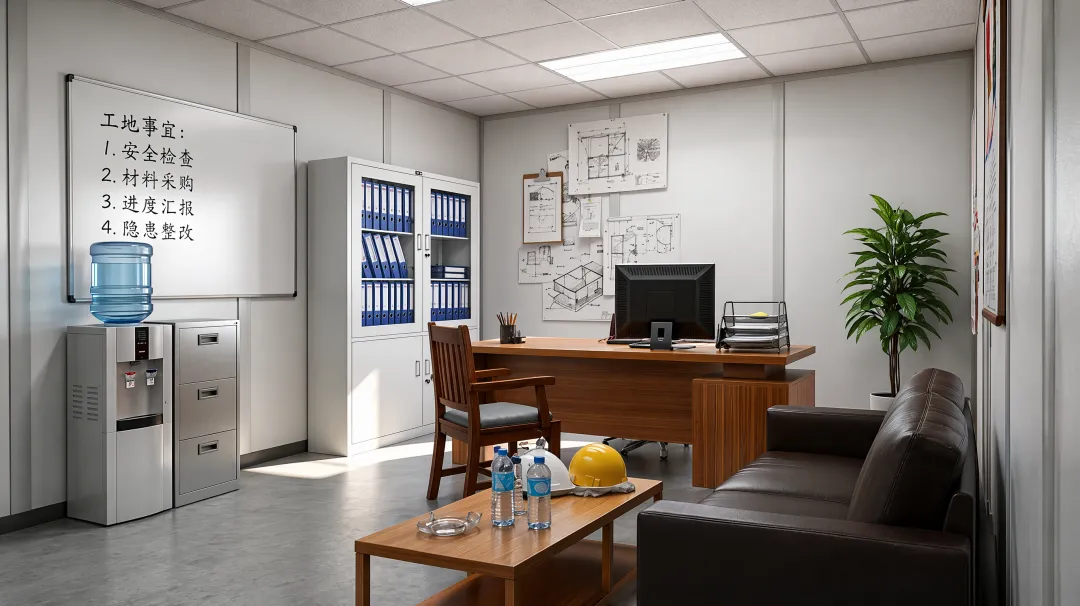
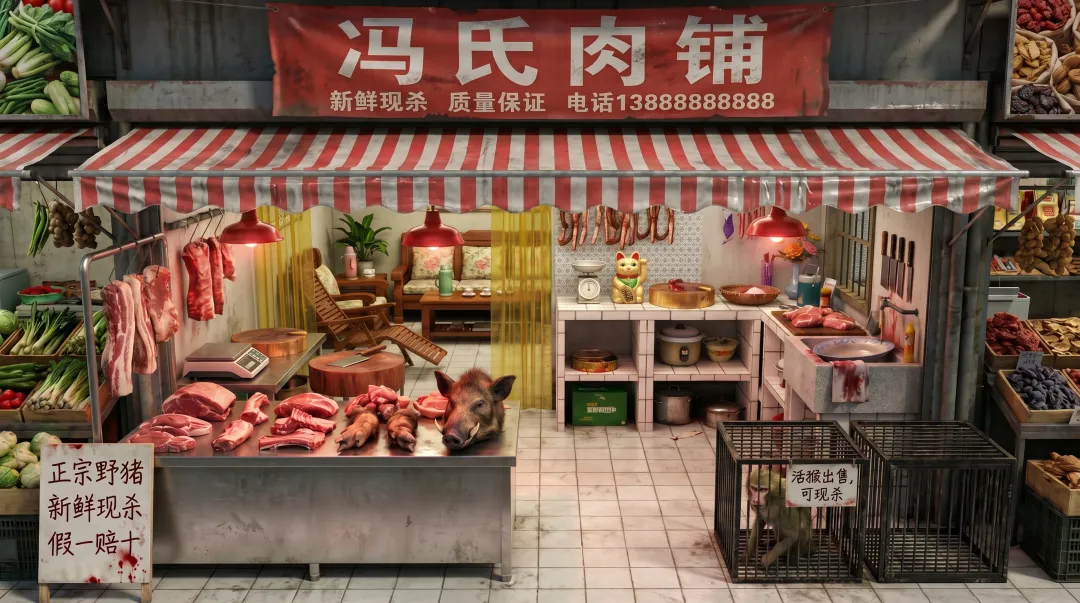
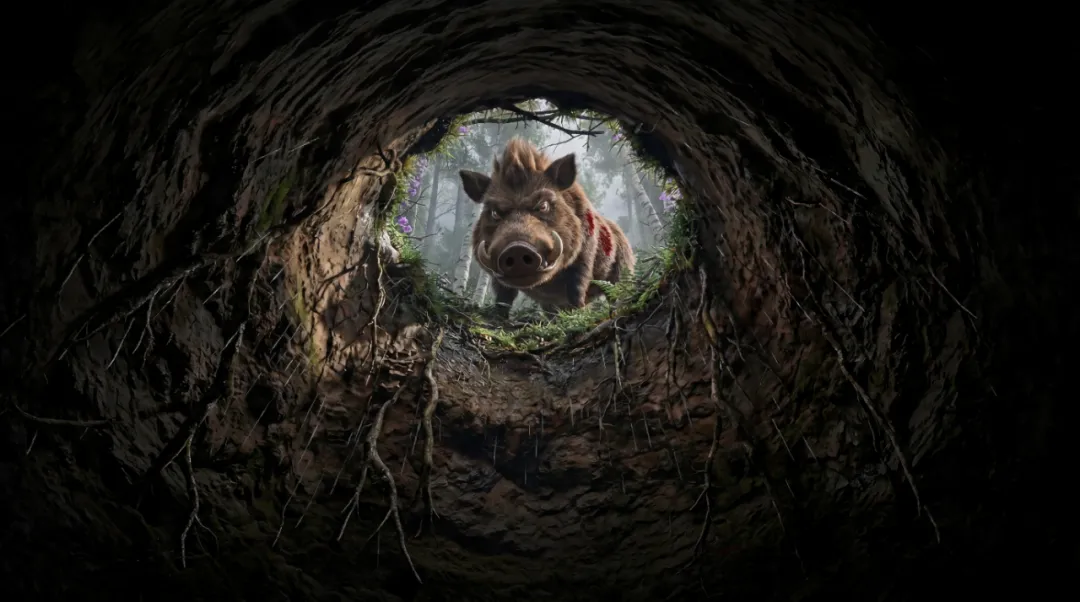
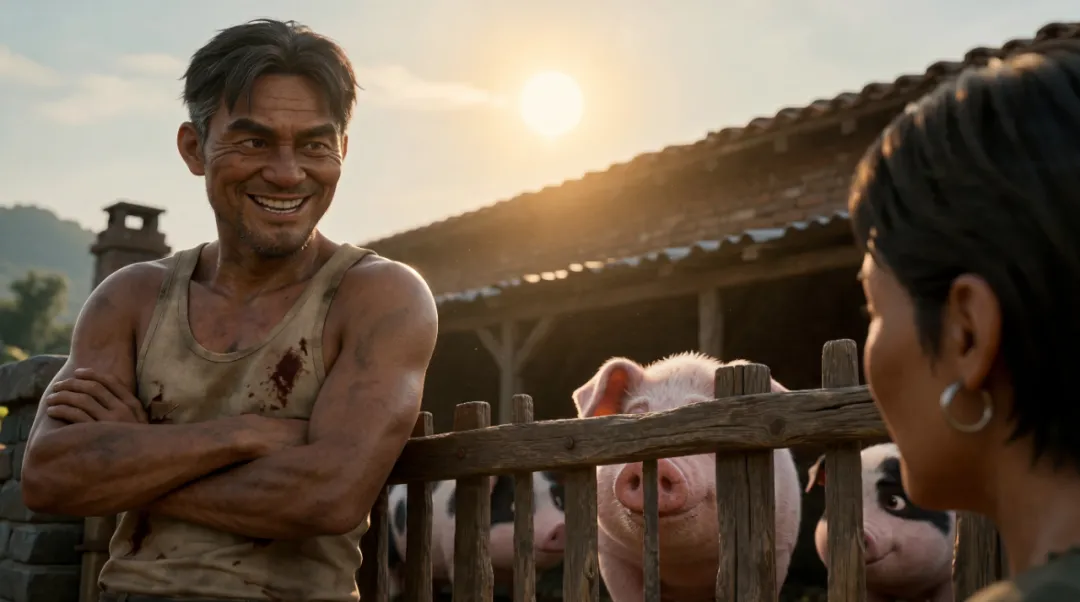
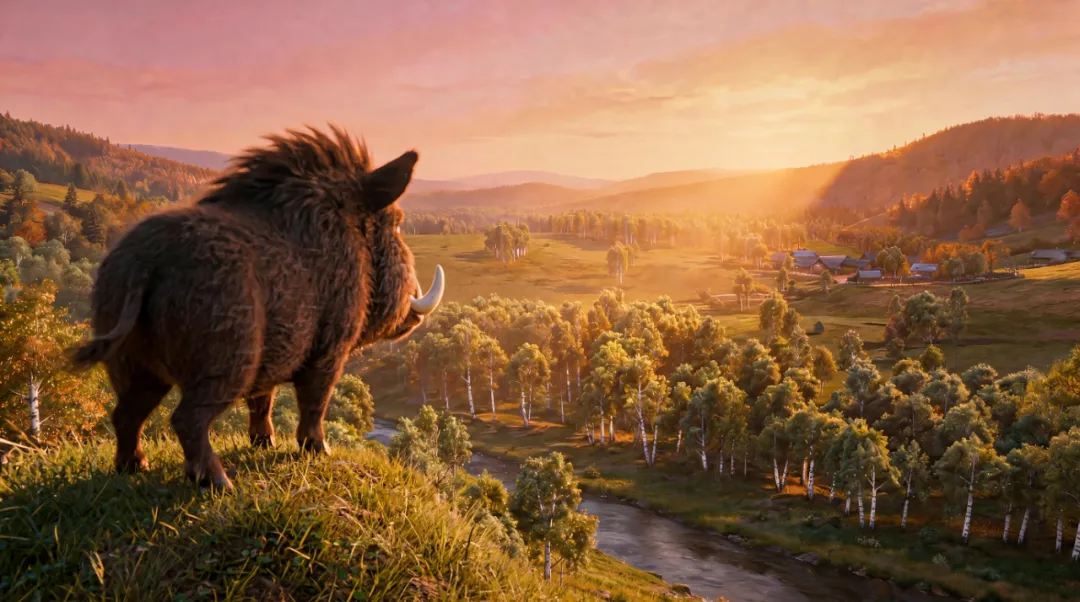
Stills from “Eight Little Wild Boars”
For more interviews in this series, please follow our media platforms including Animation Research, China Animation Research Institute, Beijing Film and Television Animation Association, AI Future Film Research Institute, and International Animation Art Research Institute.