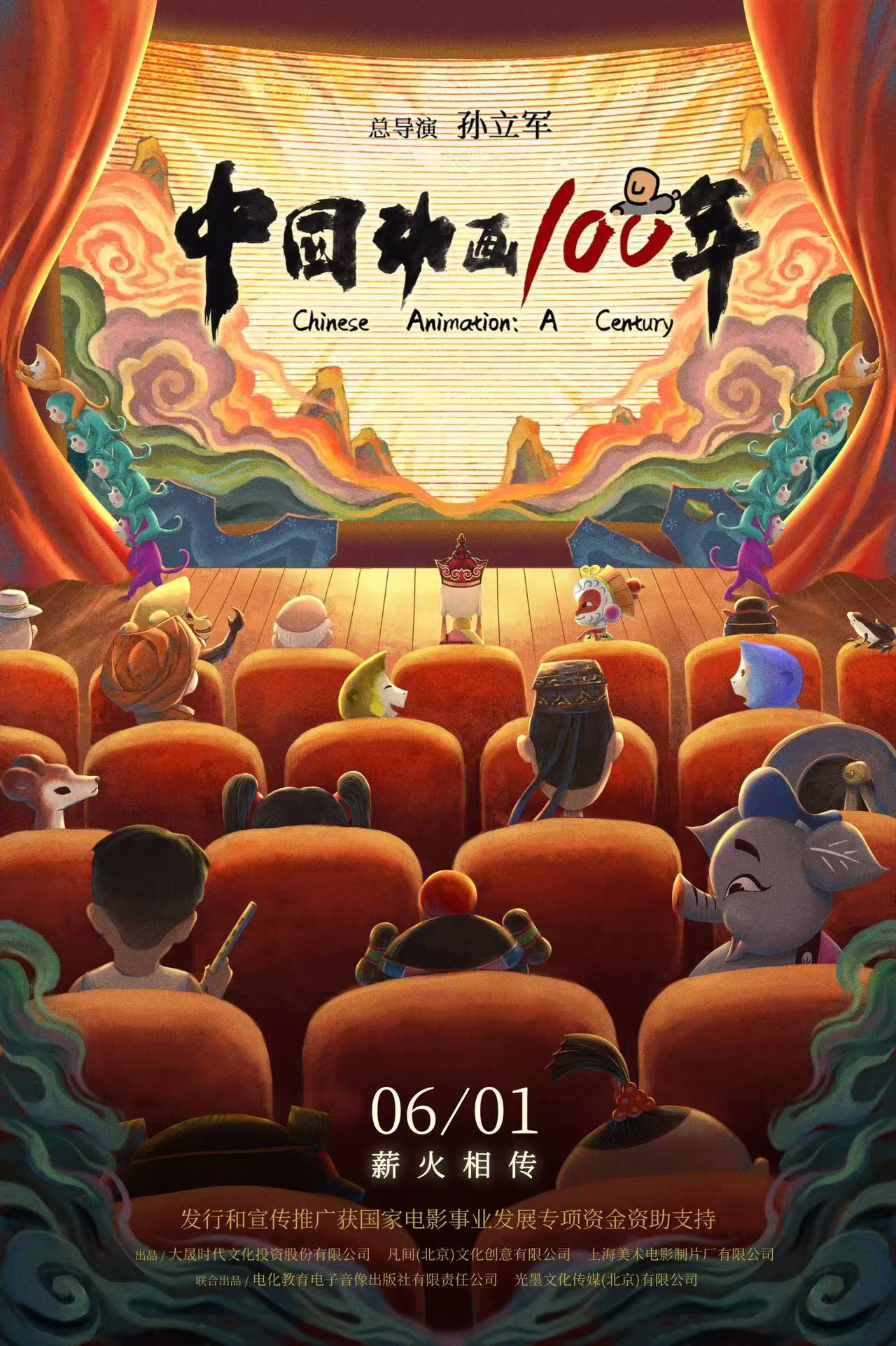
Four years in the making, with interviews with nearly 500 animators and experts, and visits to numerous animation production bases from Changchun, Shanghai to Shenzhen, the documentary film “100 Years of Chinese Animation,” initially drafted at 150 minutes but ultimately finalized at 87 minutes, was released on June 1st and has generated a significant buzz within the industry. Recently, the film’s director, Sun Lijun, gave an exclusive interview to this newspaper, frankly stating that the creation of this film aimed to establish a visual and spiritual archive for animators over the past century, filling a research gap in the history... read more

"100 Years of Chinese Animation": Building a Visual Archive of the Spirit of Chinese Animators Over the Past Century
Four years in the making, with interviews with nearly 500 animators and experts, and visits to numerous animation production bases from Changchun, Shanghai to Shenzhen, the documentary film “100 Years of Chinese Animation,” initially drafted at 150 minutes but ultimately finalized at 87 minutes, was released on June 1st and has generated a significant buzz within the industry. Recently, the film’s director, Sun Lijun, gave an exclusive interview to this newspaper, frankly stating that the creation of this film aimed to establish a visual and spiritual archive for animators over the past century, filling a research gap in the history of Chinese animation. Furthermore, it serves as a retrospective and review in the face of the advent of AI, thus heralding a new beginning for the next 100 years of Chinese animation creation.
Correcting the name: Chinese animation began as early as 1922.
Sun Lijun, who was admitted to the Animation Department of Beijing Film Academy in 1984, began teaching the Animation Department of the Fine Arts Department of Beijing Film Academy in 1988, and then served as the Dean of the Animation School of Beijing Film Academy for 12 years starting in 2000, and is currently the Vice President of Beijing Film Academy and the Dean of the China Animation Research Institute of Beijing Film Academy, has not only witnessed the development of Chinese animation since the reform and opening up, but is also a pioneering practitioner. His animated works such as “Little Soldier Zhang Ga”, “Legend of Rabbit Warrior” and “Autumn Harvest” have left a strong mark on the history of Chinese animation development with their rich Chinese aesthetics and cutting-edge technological exploration.
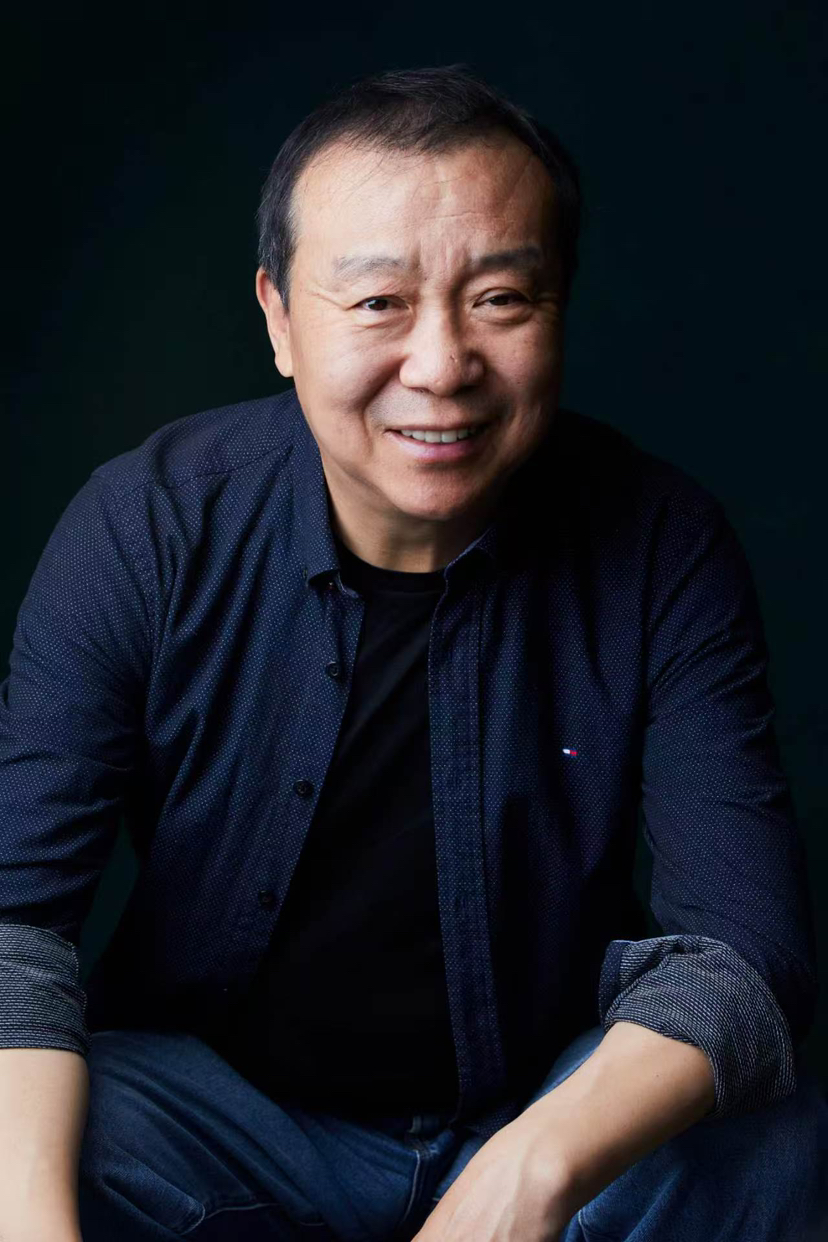
Sun Lijun
Sun Lijun told reporters that many of the animators featured in “100 Years of Chinese Animation” were his mentors, and they had discussed the future of Chinese animation together. In his view, this project has three major significances. First, it vindicates the history of Chinese animation. There has been much debate about the earliest start of Chinese animation, with some saying 1922, 1923, and others 1926. However, Sun Lijun and his team, through extensive research and interviews, ultimately determined it to be 1922. The film opens with an animated advertisement for the “Shu Zhendong Chinese Typewriter” from 1922. At that time, the Commercial Press even established a dedicated animation department for this purpose, which Sun Lijun believes is the most convincing proof. Second, the Chinese animation industry needs a review and summary as it has developed to this point. “When Chinese animation was impoverished, why was it able to create so much brilliance? I believe its core and foundation is ‘taking its own path, taking a nationalized path,’ which is the secret to the success of Chinese animation.” Finally, Sun Lijun hopes that this documentary film will offer a reflective perspective. He frankly stated that in the current environment of entertainment to the death and box office success as the sole measure of success, it is still necessary to emphasize the enlightenment, public welfare, inheritance, and cultural significance of animation creation. “As an older practitioner, I have the responsibility and obligation to record the history of Chinese animation over the past century.”
Initially, the production company invited Sun Lijun to serve as the film’s director, but he declined. He preferred creating, and time was limited. Furthermore, as a scholar, he worried that directing might introduce subjectivity. However, he was ultimately inspired by his pursuit of academic value as a teacher and the spirit of predecessors like Te Wei, a representative figure of the Chinese animation school. He said, “Many people don’t understand that during the Anti-Japanese War, animation, like comics at the time, was an important weapon, capable of inspiring countless patriotic men to dedicate themselves to the revolution and sacrifice their lives for their country.”
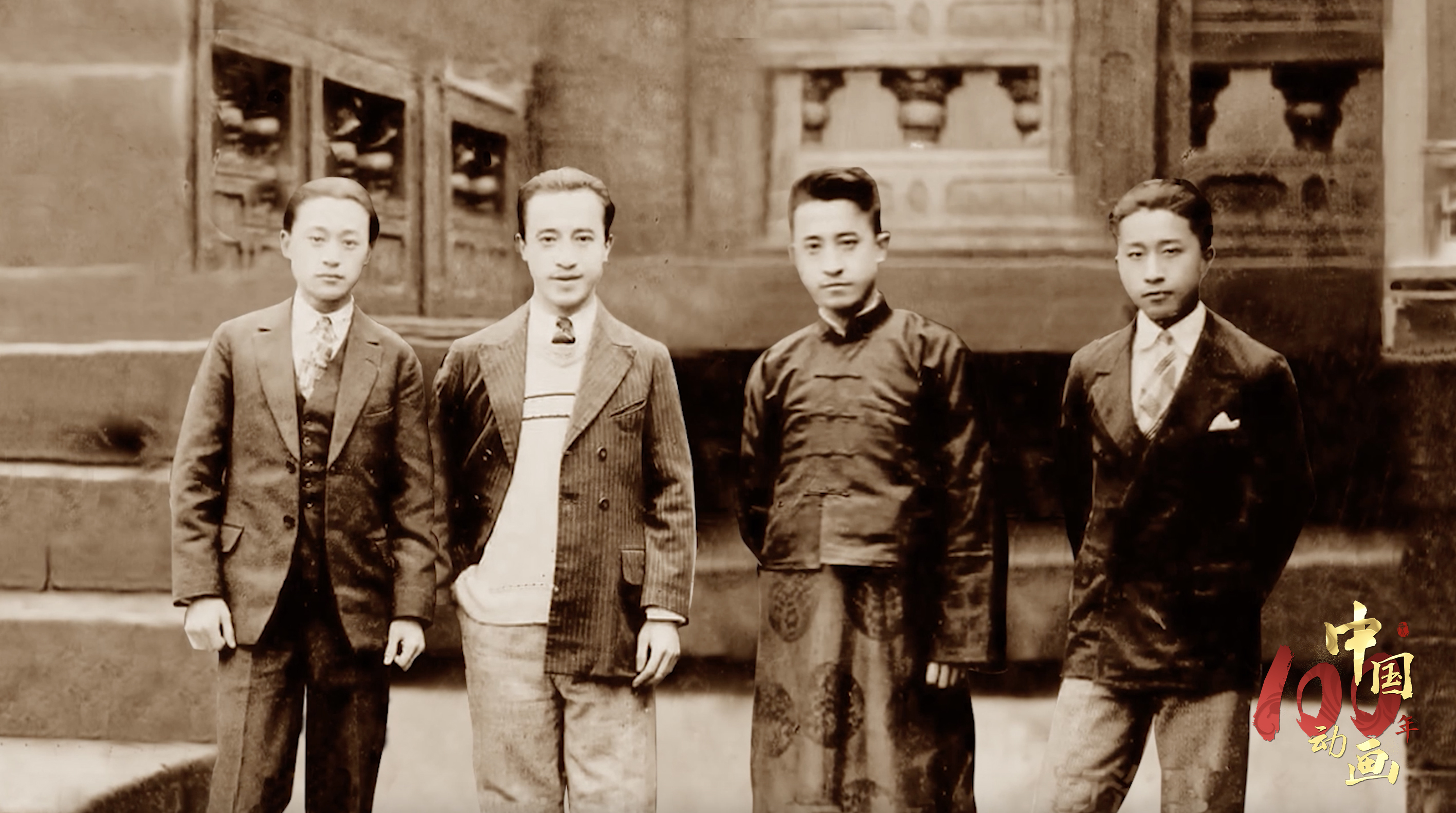
The four Wan brothers, from left to right: Wan Chaozhen, Wan Guchan, Wan Laiming, and Wan Dihuan.
A Tribute: These Three Deserve Special Recognition
The documentary “100 Years of Chinese Animation” utilizes a wealth of historical footage. Sun Lijun revealed that as early as 20 years ago, when the Animation School of Beijing Film Academy was first established, he arranged for teachers to interview veteran artists in Shanghai. At the film’s premiere, Sun Lijun was moved to tears. He recalled Ada (Xu Jingda), the director of “Three Monks” and “Nezha Conquers the Dragon King”—at the age of 52, Ada, despite his heavy workload, still came to the Beijing Film Academy to support teaching, and Sun Lijun was fortunate enough to become his direct disciple. One day in 1987, Ada suffered a sudden cerebral hemorrhage and collapsed in class. This scene remains unforgettable for Sun Lijun. “Filming ‘100 Years of Chinese Animation,’ I felt like Don Quixote charging into battle; Teacher Ada was my pillar of support,” Sun Lijun said.
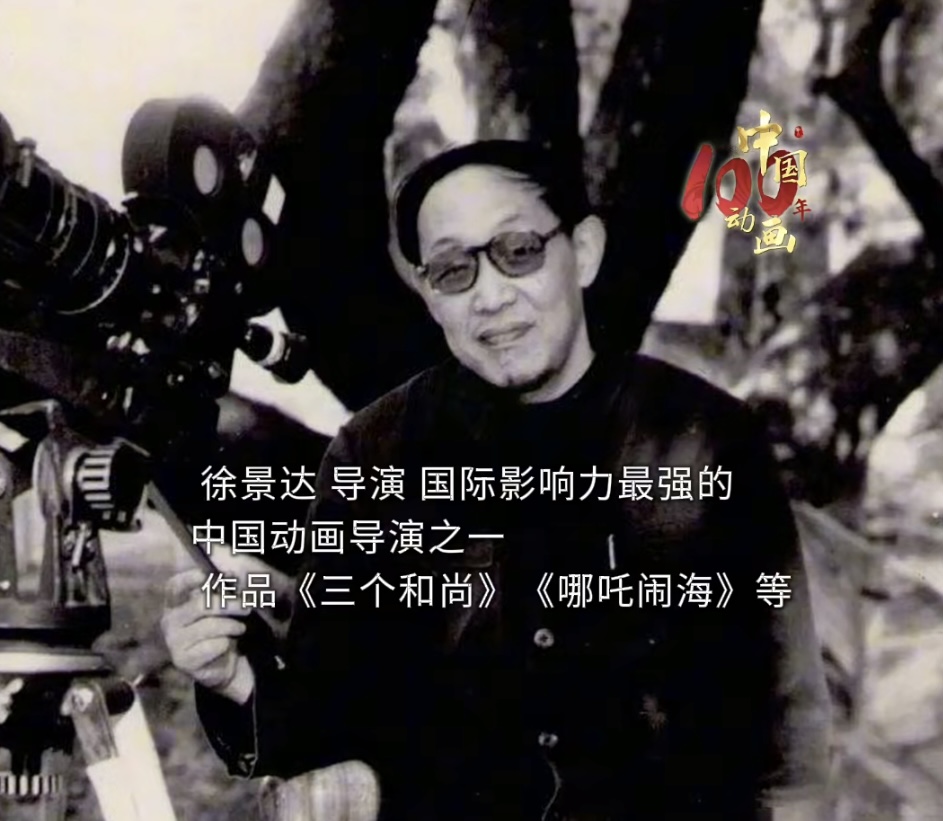
Xu Jingda is one of the most internationally influential Chinese animation directors, whose works include “Three Monks” and “Nezha Conquers the Dragon King”.
“100 Years of Chinese Animation” is divided into five chapters: Budding, Baptism, Blooming, Brilliance, and Striving, with over 100 animated works selected. Sun Lijun told reporters that the selection primarily focused on animated films and short films, with television animation not being the main focus. These works largely include internationally award-winning pieces, winners of the Golden Rooster Award, the Huabiao Award, and the “Five-One Project” Award, with works from the Shanghai Animation Film Studio being the main contributors.
In addition, there are many representative figures from universities who have won awards. For example, the “Animation Academy Award” held by the Animation School of Beijing Film Academy has been held for 25 sessions, during which many animation talents have been discovered. For instance, director Jiaozi won the “Best Technical Application Award” at the 9th Animation Academy Award in 2009 for his short film “Hit, Hit a Big Watermelon,” and director Yu Shui won the “Best Animated Short Film Gold Award” in 2004 for his master’s thesis short film “Life Is Like This.” This time, Jiaozi’s “Ne Zha” and Yu Shui’s “Chinese Fantastic Tales” were both selected for “100 Years of Chinese Animation.” “These young directors, after winning awards for their short films, have incubated new feature films and become the backbone of Chinese animated film creation today.”
Wan Laiming, Te Wei, and Ada (Xu Jingda) became the three most important characters in the film.
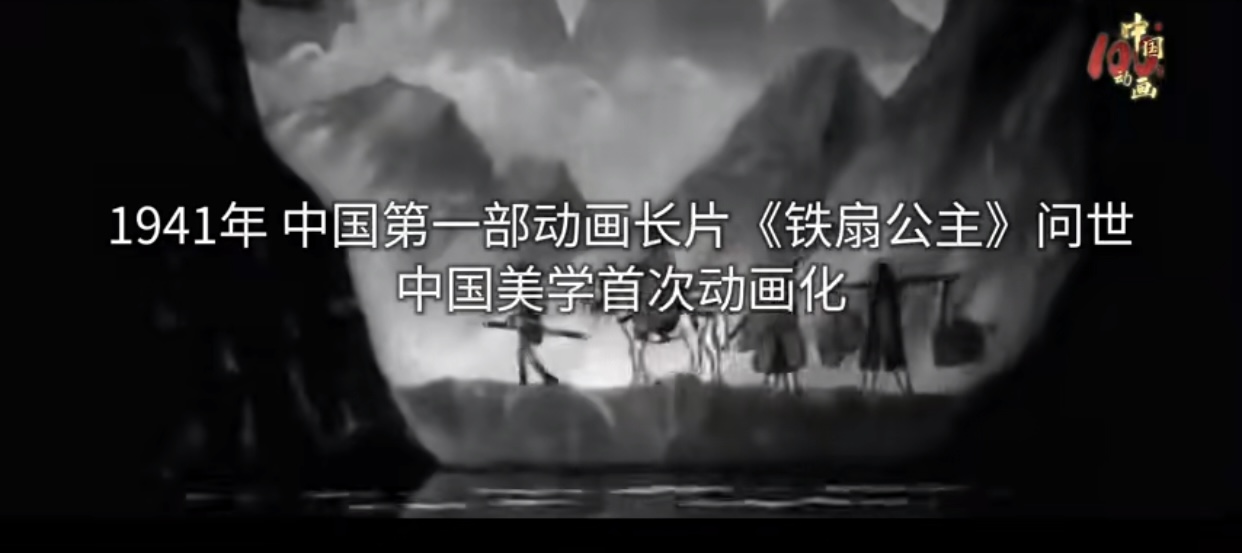
The four Wan brothers were not only pioneers in Chinese animation, but also created Asia’s first animated feature film, “Princess Iron Fan” (1941). Wan Laiming, one of the four brothers, was the chief director of “Havoc in Heaven,” which “not only influenced Chinese animation, but also inspired the creation of neighboring Japan.”
Te Wei was a leading figure in Chinese animation creation after the founding of the People’s Republic of China. As the first director of the Shanghai Animation Film Studio, he put forward the strategic creative slogan of “exploring the path of national style and knocking on the door of comedic style,” establishing a unique Eastern aesthetic system for Chinese animation, which is the foundation of the “Chinese Animation School.” Sun Lijun believes that without this spirit, there would have been no large number of animated films with distinct national styles that followed.
Ada, on the other hand, is a Chinese animator with an international perspective. He is fluent in English, plays the piano exceptionally well, and most importantly, possesses a natural sense of humor and imagination. “He taught us what ‘Chinese wisdom’ is,” Sun Lijun believes. Ada’s 20-minute short film “Three Monks,” co-created with Ma Kexuan in 1980, fully utilizes the hypothetical nature of the stage with its no-dialogue, square composition, and minimalist style, influencing the creation of Chinese and world animation. “These three deserve our detailed and elaborate expression.”
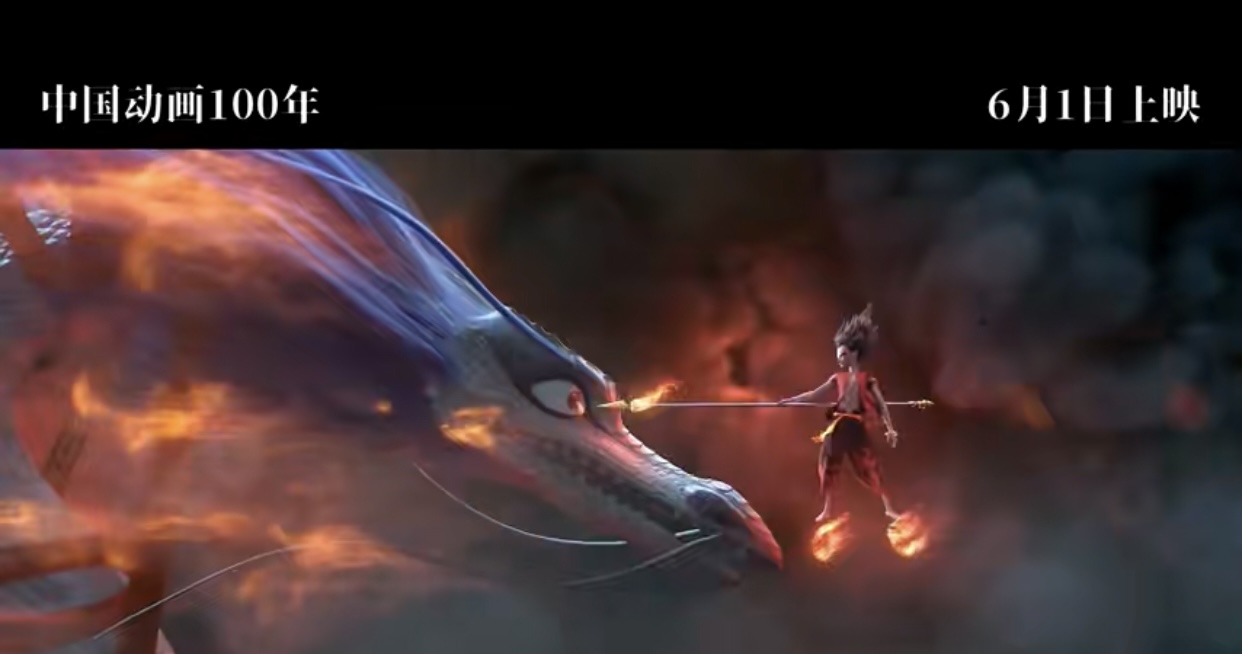
Furthermore, the film opens with a cosplayer dressed as Sun Wukong in a park and concludes with references to Monkey King: Hero Is Back and Ne Zha. Sun Lijun believes that Sun Wukong is not only a household name in China but also a world-class IP. Today, China has not only Sun Wukong but also animated characters like Black Cat Detective, Rabbit Warrior, Ne Zha, and Xiong Da. Using the image of Sun Wukong throughout the film is both an inheritance and an encouragement, “hoping that more classic characters will emerge in Chinese animation in the future.”
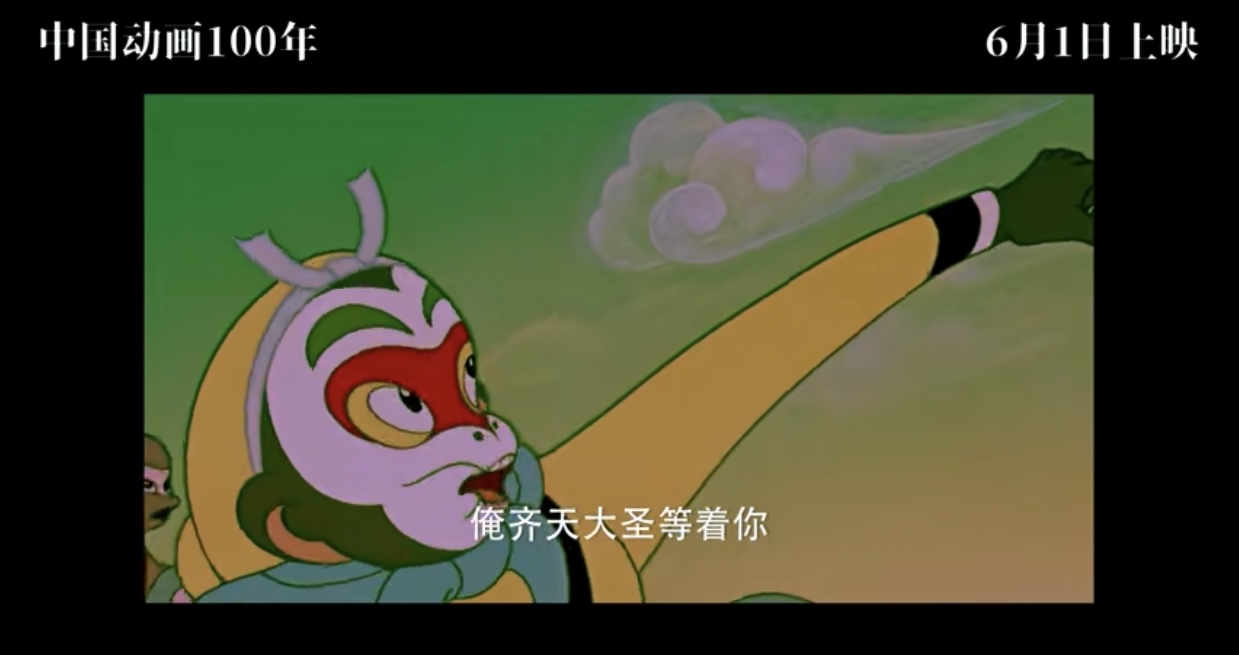
The classic animated film “Havoc in Heaven”
Sun Lijun revealed that many universities have already included “100 Years of Chinese Animation” as the first chapter in their Chinese animation history curriculum, requiring students to watch the film before studying animation history and theory. The film has also been sold to international institutions such as the French National School of Cinema and Television and the New York Film Academy.
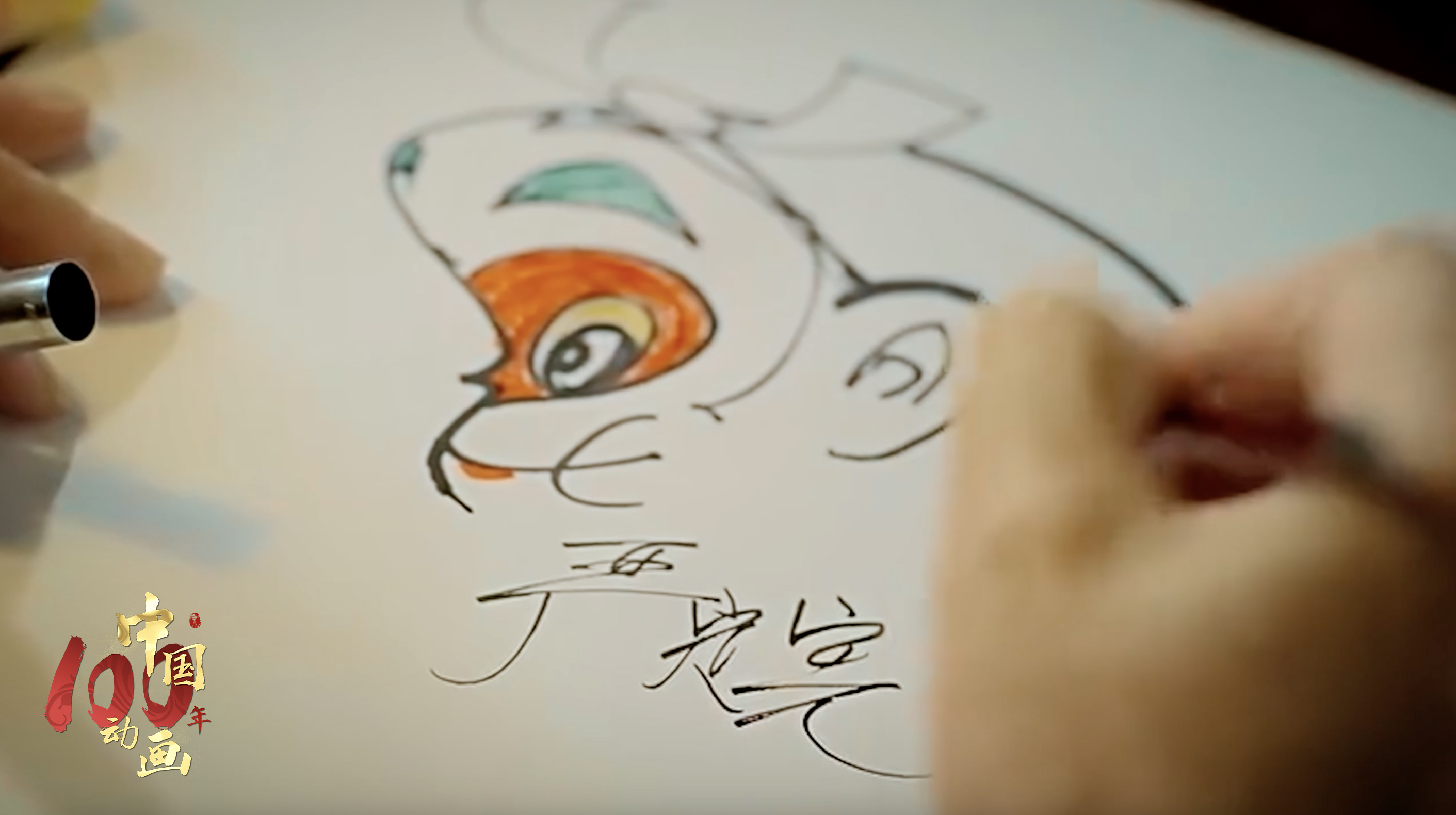
Prediction: AI-generated images will dominate half of the entertainment video market.
During the production of this film, AI technology was fully entering the film and television industry, and Sun Lijun also hoped that the film could provide inspiration and encouragement for the creation of Chinese animation in the next 100 years.
Sun Lijun is not at all averse to AI. “In today’s world of rapid technological iteration, no technology has ever iterated as quickly as AI. Even for someone like me who has experienced both film and digital technologies and thought I understood technology very well, it’s shocking and sudden. It’s a disruptive technology.” Since 2023, Sun Lijun has actively advocated for reforms in university teaching and called for the active adoption of AI technology. He also published the world’s first monograph on AI painting, “AI and Painting: Contemporary Ink Art ‘Happening’,” over 300 pages long. In 2024, he created his first AI painting, a 2-meter by 2-meter work, half painted by Sun Lijun and the other half generated by AI.
At the 16th Beijing International Film Festival in April this year, Sun Lijun also appeared as the chief director at the press conference for 10 AI-themed films, saying, “These are all 90-minute works that will be released in theaters in the future.”
Sun Lijun believes that the arrival of AI will bring about an intelligent imaging revolution. “It will not only change the so-called animation creation, but also break the boundaries between live-action films and traditional animation creation. The emergence of AI will create new imaging power. It can produce films like live-action films, and it can also produce traditional 2D and 3D animation works.” Sun Lijun predicts that AI imaging will occupy at least “half” of human consumer entertainment imaging.
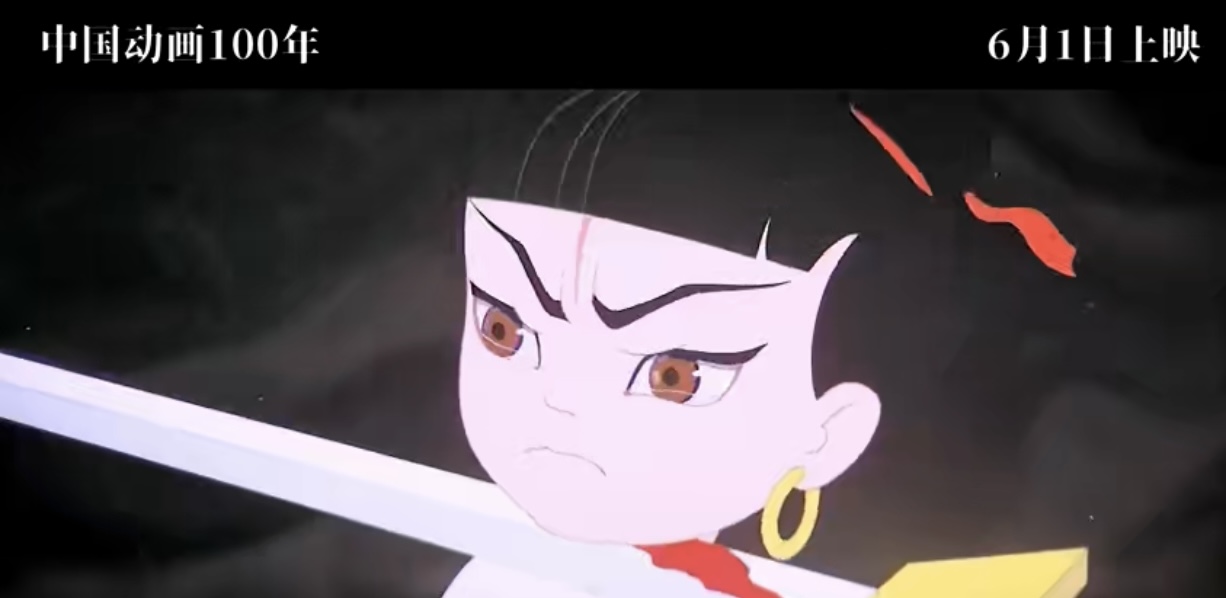
The animated film “Nezha Conquers the Dragon King”
Change: Imagination, aesthetic sense, and execution are more important.
At the Beijing Film Academy, the traditional education model is changing. Sun Lijun told reporters that this is also true for university education worldwide.
At the Beijing Film Academy, when AI first emerged, Sun Lijun established the “Ada Animation Experimental Class.” “In my class, the teaching method shifted from the original ‘indoctrination’ to ‘heuristic’, and from the original ‘cramming’ to ‘interest-based’ teaching. I told the students that as long as they finished their classwork, they could play in their spare time, and I wouldn’t record their tardiness or absence. They should play something meaningful to cultivate their imagination, aesthetic sense, and execution ability. These three abilities are very important in the AI era, and at this time, we should pursue ‘interest-based teaching’.”
As a cultivator of artistic talent, Sun Lijun requires students to find their true areas of interest. The complex techniques and tools of the past are no longer important; what matters are innovation, aesthetic sense, execution ability, self-discipline, and even a broader range of comprehensive qualities and interests. The demands on teachers are also higher in the AI era. Sun Lijun revealed that some colleagues hadn’t created anything for 20 years, but after the arrival of AI, they felt the pressure and proactively started creating again, with some even winning awards. “The arrival of AI isn’t about changing or eliminating any departments, majors, or disciplines,” he said. “It’s revolutionary, subtle, and irreversible.”
Edited by: Wang Jinyue